In this article
- The real question: not paper vs pixels, but how it feels to receive
- Digital gift cards: where they win (speed, reach, last-minute)
- Physical gift cards: where they win (something to hold, the handover)
- E-gift card vs physical gift card: the best gift card type for each situation
- Which one fits your occasion (birthday, long-distance, work, last-minute)
- The third option: a digital gift card that still feels like a moment
- Frequently asked questions
You have decided on a gift card. Smart move. Now you are stuck on the part that actually matters: digital gift card vs physical, which one makes your person feel something when it lands? You worry the emailed one looks lazy. You worry the posted one shows up three days after the birthday. Both fears are real, and both are fixable. We compare delivery, timing, cost, and the feeling each format gives, so your gift lands the way you want. By the end you will know exactly which to pick, and how to make either one feel like a moment instead of a bank transfer.
The real question: not paper vs pixels, but how it feels to receive
The format is not the decision. The reveal is. Nobody opens a gift and thinks "ah, encrypted code delivered via SMTP." They feel something, or they do not. So the honest question behind the digital gift card vs physical debate is this: what do you want the moment of receiving to look like?
Here is the twist the research keeps turning up. Givers and recipients want different things, and givers usually guess wrong. A 2022 study by researchers at West Virginia University found that most gift givers are less likely to choose a digital gift card even when the recipient would actually prefer it. Givers overestimate how much a digital card breaks the social rules of gift giving, fearing it reads as lazy or thoughtless. The recipient, meanwhile, is often perfectly happy to get something they can use in two taps.
So the "is a digital gift card impersonal" worry lives mostly in the giver's head. It only becomes true if you send a bare code with no message and no thought. The thing that makes a gift feel personal was never the plastic. It was the message, the timing, the sense that you picked this for this person. A physical card mailed with a blank signature line is just as cold as a stripped-down email. The best gift card type is the one you actually bother to dress up.
That reframe changes everything below. We are not asking which is better in the abstract. We are asking which one helps you create the moment you have in mind, for this person, on this occasion, within the time you have left.
Digital gift cards: where they win (speed, reach, last-minute)
AI-generated image
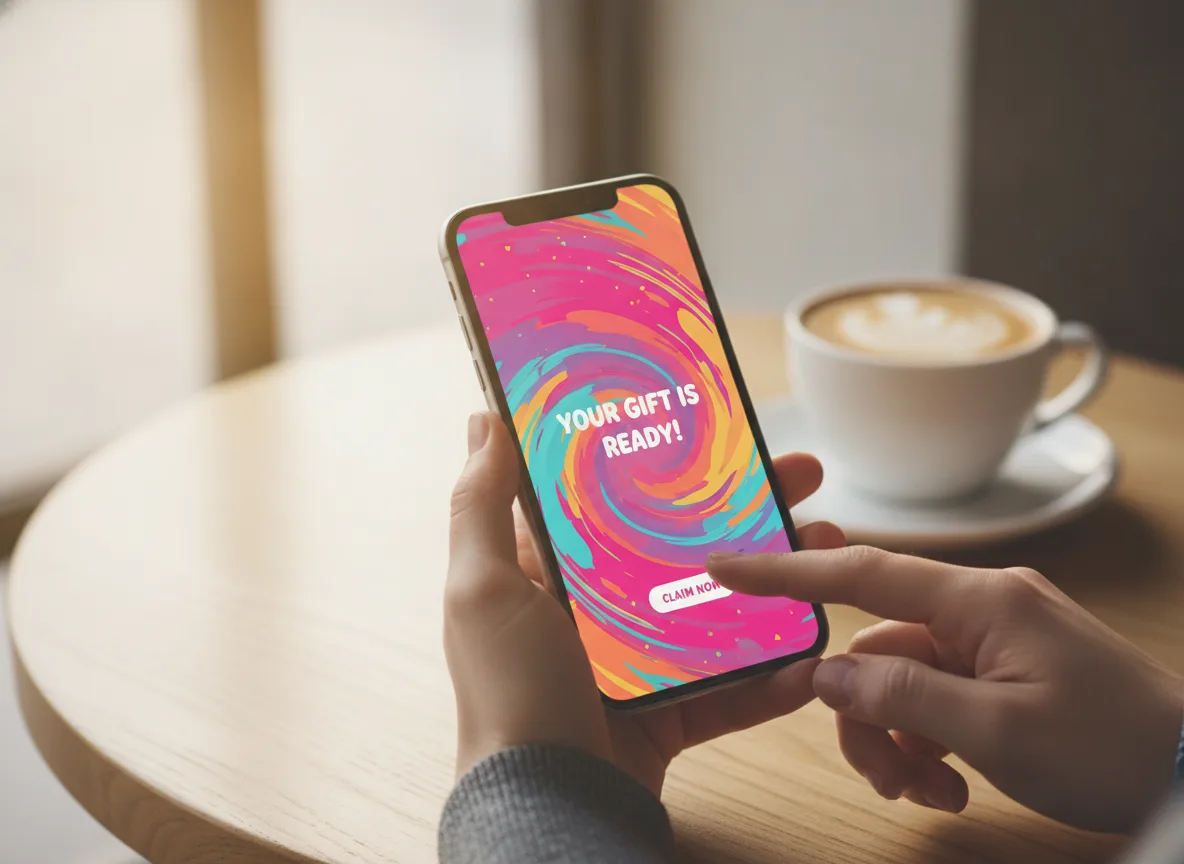
Digital gift cards earn their keep on three fronts: speed, reach, and resilience. If your occasion is tomorrow, or your person lives three time zones away, the digital gift card vs physical question usually answers itself in favor of digital. Digital has also tipped from alternative to default: in 2024, digital gift cards overtook physical for the first time, passing 50% of the UK market according to the Gift Card and Voucher Association, with the rest of Europe trending the same way.
Speed and timing
The honest answer to "how fast do digital gift cards arrive compared to physical" is this: instantly versus days. Digital cards land by email, SMS, app or wallet within minutes. According to Blackhawk Network research, many business reward programs quote 3 to 10 business days for physical cards to be printed, packaged and shipped, while the digital version is delivered the moment you hit send. You can also schedule a digital card to arrive at 8am on the actual birthday, which is a quiet superpower for anyone who plans ahead.
That speed shows up in how people use them, too. Paytronix data shows consumers wait an average of 16.8 days to spend a digital gift card versus 35.3 days for a physical one. Digital cards get redeemed roughly twice as fast, which means your gift actually gets used instead of living in a drawer.
Reach, cost and resilience
Digital cards cross borders without customs, postage or a tracking number you refresh anxiously. They cut printing, packaging and shipping costs entirely. And they are harder to lose: a code that lives in your inbox and your phone is easier to recover than a single piece of plastic that slips behind a sofa cushion. On the safety question, are digital gift cards safer than physical gift cards? Generally yes, because there is no card to swipe off a rack, and codes can be tracked or deactivated if something goes wrong.
This is also why digital gift cards for business reward programs have become the default for HR and marketing teams. Instant reach across countries, easy tracking and reporting, lower cost per recipient, and far less fraud exposure than mailing plastic around the world.
Sending a digital card for a same-day occasion? Schedule the delivery for early morning rather than firing it off at 11pm, so it greets your person at breakfast instead of getting buried under overnight notifications.
Physical gift cards: where they win (something to hold, the handover)
Physical cards win on one thing that is hard to fake: there is something to hold. You can wrap it, slide it into a card, hand it across a table and watch the face. That ceremony is real, and it is exactly why physical cards stay popular despite digital's practical edge.
The research backs the feeling. Physical cards align more closely with traditional gift-giving norms, so they read as more "gift-like" to many givers. When presentation is the whole point, a premium executive gift, a milestone birthday, a moment you want to mark in person, the tangible object carries weight a screen cannot. The handover is the gift as much as the value inside it.
Or let the gift become the experience
With Abrakadoo, your photo becomes a caricature and the gift card hides inside three mystery boxes. The person you love picks their own box on a personal gift page.
See how it works Ready in minutes · EN, DE and EL · From 17 EURThere are also practical cases where physical simply works better. A recipient without reliable internet, without a smartphone, or who is genuinely uncomfortable navigating codes and apps will have an easier time with a card they can carry to the counter. For some older relatives, the plastic version removes friction rather than adding it.
The trade-offs are the flip side of digital's strengths. Physical cards can arrive late, which is the exact nightmare you are trying to avoid when buying close to an occasion. They are also easier to lose or forget. In the UK alone, the Gift Card and Voucher Association reports that around £300 million in gift cards goes unspent each year (figure from their most recent published annual data), and physical cards are especially prone to being misplaced in a drawer. They also cost more to produce and post, which matters less for one heartfelt gift and a lot for a thousand-person reward program.
So when you weigh the digital gift card vs physical card choice, physical is not the safe, classy option and digital the lazy one. Physical is the right call when the in-person handover is the moment, when the recipient prefers tangible, and when you have the days to spare for delivery. Outside those conditions, you are paying in time and risk for a ceremony you may not even get to witness.
E-gift card vs physical gift card: the best gift card type for each situation
AI-generated image
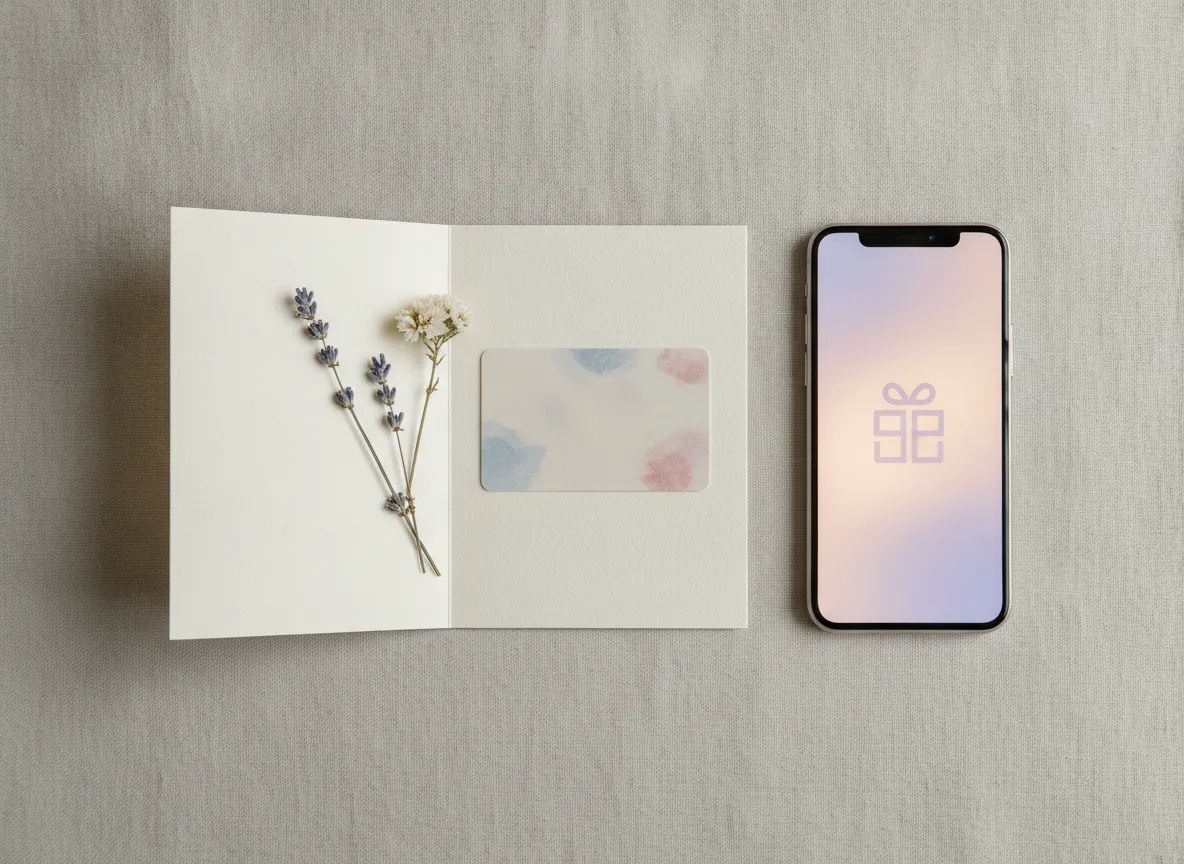
Here is the digital gift card vs physical comparison laid out on the four things you actually care about. When people ask "e-gift card vs physical gift card, which is better," the honest answer is that it depends on which row matters most for your gift.
- Delivery: Digital arrives in minutes by email, SMS or wallet. Physical needs printing and shipping, often 3 to 10 business days in business programs, and depends on the post.
- Timing and redemption: Digital gets spent fast, averaging 16.8 days to redemption versus 35.3 days for physical. Less chance of it being forgotten.
- Cost: Digital removes printing, packaging and postage and scales without inventory. Physical carries production and shipping costs that add up at volume.
- Safety: Digital codes can be tracked or deactivated and are harder to lose. Physical cards can be stolen off a rack or misplaced at home.
- Reach: Digital crosses borders instantly with no customs. Physical means international shipping, delays and duties.
- The feeling: Physical gives you a tangible handover. Digital gives you instant arrival plus, done right, video, custom design and a scheduled reveal.
Now the personalization question, because this is where most people assume physical wins by default. It does not. A physical card lets you wrap it and write inside a paper card. A personalized digital gift card lets you add a custom design, a written message, sometimes a video, and schedule the exact moment it appears. When you look at the digital gift card vs physical card through a personalization lens, digital is arguably easier to make personal, because the personalization is built into the delivery rather than depending on your handwriting and gift wrap skills.
If you want the full toolkit for either format, our guide on how to personalize a gift card walks through messages, designs and reveals that stop any card from reading as just money.
Whichever format you pick, write the message first and the amount second. A specific line such as "for that pottery class you keep talking about" turns a generic balance into a gift that clearly has the recipient in mind. Aim for at least two sentences so the recipient feels the thought behind it.
Which one fits your occasion (birthday, long-distance, work, last-minute)
Rather than argue about the best gift card type in general, match it to the situation in front of you. Here is how the format decision usually breaks down by occasion.
Birthdays and name days
Seeing the person in real life? A physical card you can hand over works beautifully, and the ceremony is yours to enjoy. Celebrating from a distance, or just want it to land at the perfect moment? Schedule a personalized digital card for the morning of. For name days especially, where timing is the whole tradition, a scheduled digital reveal is hard to beat. Our name day gift ideas have more on marking the day well.
Long-distance and last-minute
This is digital's home turf. No international shipping, no customs, no nail-biting over whether it arrives in time. If the occasion is tomorrow or today, digital is the only format that genuinely keeps up. If you have a stack of occasions creeping up on you, our last-minute gift ideas are built for exactly this kind of pressure.
Work, rewards and corporate
For employee incentives, customer promotions or research rewards, digital wins on almost every measure: instant delivery to hundreds of people, easy tracking for HR and finance, reach across borders, and lower cost. Reserve physical for the premium executive gift where presentation is the point, or for a recipient who is genuinely happier with plastic.
For holiday gifting, the answer is mixed: physical for gifts handed over in person, digital for everyone you are mailing or who lives far away. There is no rule that says one household event needs one format. Mix them to fit each relationship.
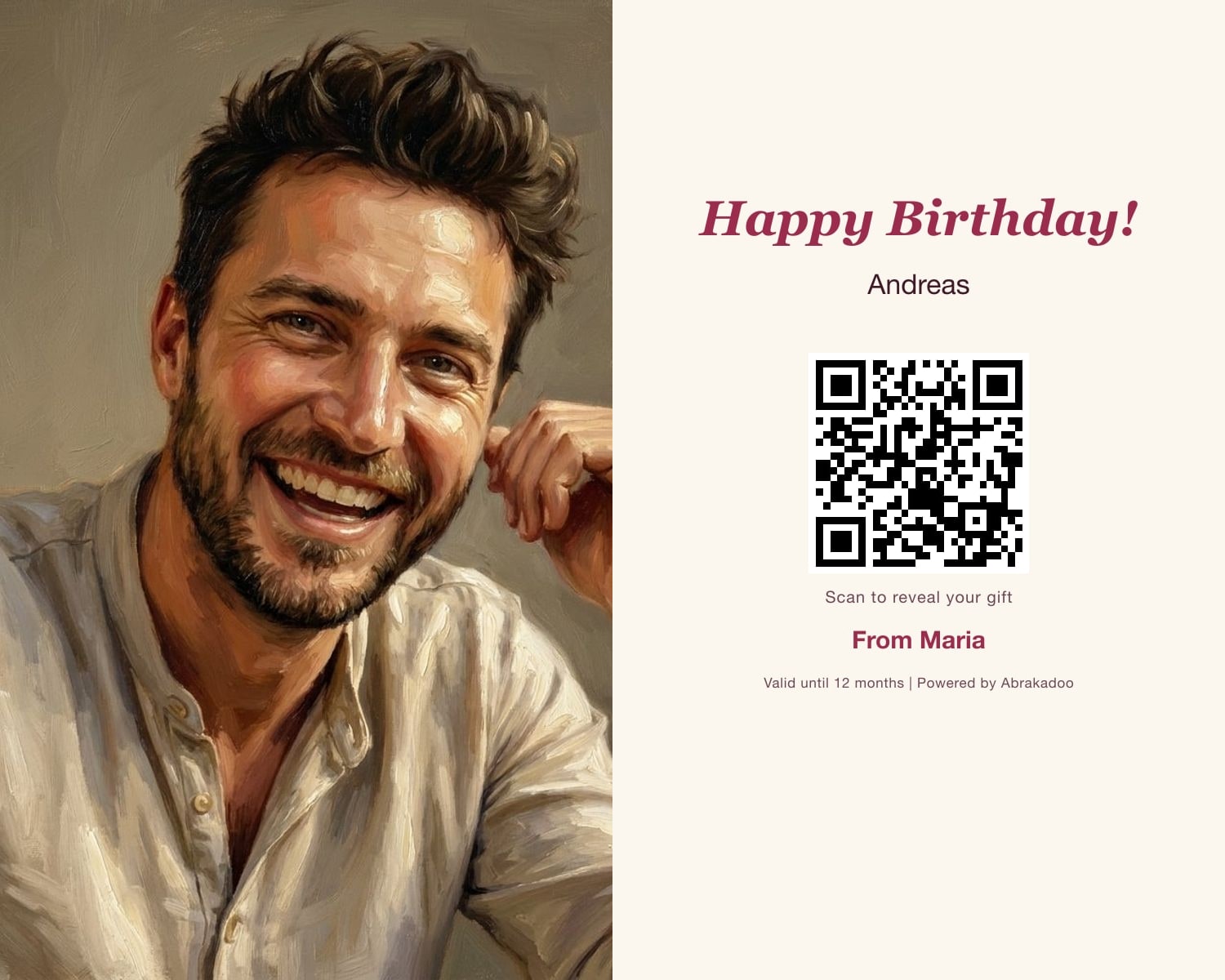
Your photo. Their caricature. One unforgettable reveal.
Upload a photo, pick gift categories, and we build a personal gift page with caricatures, mystery boxes and a printable QR voucher.
Try the live demoThe third option: a digital gift card that still feels like a moment
Here is the part most comparison articles miss. The choice is not digital-cold versus physical-warm. The best version of this comparison ends with a digital card that has been built to feel like an event, not a notification. Done well, the divide between formats simply disappears.
That is the idea behind a personal gift page rather than a bare code. The recipient opens a page made for them: a custom design, a written message, a reveal that unfolds instead of just listing a balance. You can fold in a caricature from your photo, a short video, or a sequence that builds up to the gift. Suddenly the speed and reach of digital come with a moment that rivals any handover, and you skip the postage and the late-arrival panic entirely.
This is also where the "is a digital gift card impersonal" fear finally dies. Impersonal is a bare 16-digit code in a plain email. A reveal built around the person, with their name, their inside joke, their favorite thing, is more personal than a generic plastic card from a rack. The medium was never the problem. The effort was.
So if you came here torn between fast-but-flat and warm-but-slow, this third option dissolves the trade-off. You get instant delivery, scheduling, easy personalization and low cost, plus a genuine moment of opening. For most modern gifting, that is the best gift card type going.
Whichever way you land on this format question, the same handful of moves keep any card from reading as a cash transfer. Lead with a specific message: name the reason, the memory or the thing you hope they spend it on. A concrete detail ("for the cooking class you bookmarked") signals real thought far more than a generic "enjoy this gift." Then design it for them, whether that means a custom look, a photo or a caricature from your photo that turns a template into something obviously theirs. Finally, time the reveal: schedule a digital card for the exact moment, or stage the physical handover when you can actually watch them open it. Do those three things and the format almost stops mattering.
You can explore the full range of personalized gift cards at Abrakadoo to see how a digital reveal can be built around someone specific, from the design to the delivery time.
Frequently asked questions
What is the difference between a digital gift card and a physical gift card?
Are digital gift cards safer than physical gift cards?
How fast do digital gift cards arrive compared to physical cards?
Can digital gift cards be used in-store, or only online?
Build your personalized gift card at Abrakadoo

Builds gift experiences in Cyprus together with Konstantina. Believes the best thing you can give is a special moment.